


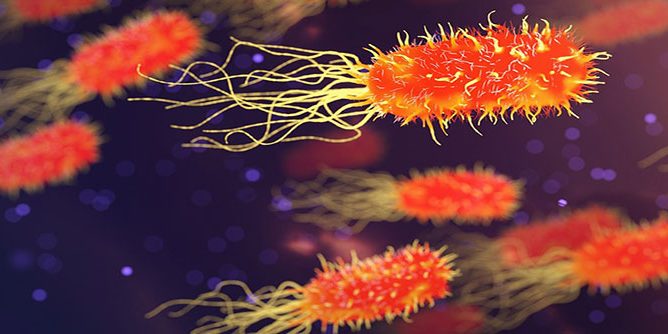
Enterobacteria that is part of the microbiota of the digestive tract of healthy animals.
Escherichia coli (E. Coli) is an enterobacteria that is part of the microbiota of the digestive tract of healthy animals. It helps in the maintenance of intestinal homeostasis by contributing to the correct structural and functional development of the digestive tract. The vast majority of isolates present in the intestine are commensal and non-pathogenic for pigs.
However, some E. coli isolates have virulence factors that make them pathogenic.
Such as the different adhesins or adherence factors and enterotoxins. The main clinical pictures due to pathogenic strains of e. coli that cause diarrhea in pigs would include: neonatal colibacillosis, post-weaning colibacillary diarrhea and edema disease.
Colibacillosis is an infectious disease of the digestive tract that is associated with pigs. It is associated above all in the lactation and weaning phases. These virulence factors allow the E. coli isolates that cause diarrheal colibacillosis to be classified into two well-differentiated pathotypes:
Pathotypes of E. Coli
-
Enterotoxigenic coli ( ETEC )
It adheres through adhesins, the most important of which are the fimbrials , protein structures that allow attachment to the intestinal wall. In porcine ETEC isolates, the most frequent fimbriae are called F4, F5, F6, F41 and F18.
This union allows the colonization, by E. coli, of a part of the intestine and the subsequent production of enterotoxins. There are two large groups of enterotoxins that are classified according to their resistance to temperature, the so- called thermolabile toxins (LT) and the thermoresistant toxins (ST).
ETEC isolates are the main pathotype identified in neonatal diarrhea associated with E. coli during the first 24-48 hours of life of piglets, extending up to the first week. During the rest of the lactation, E. coli has a secondary role. Participates in mixed infections, along with other pathogenic microorganisms.
-
Enteropathogenic coli ( EPEC )
Enteropathogenic E. coli or EPEC strains, also called adhesion and effacement strains, cause clinical disease by binding to enterocytes via an outer membrane protein called intimin (eae) . This union produces the destruction or “erasing” of the microvilli. This reduces the intestinal surface and, therefore, alters the digestion and absorption of nutrients.
Post-weaning colibacillary diarrhea is also due to enterothixigenic E. coli (ETEC) strains. Which have a combination of binding factors and enterotoxins necessary for intestinal disease to occur. This bonding and adherence allows the ETEC to resist normal bowel movements. In this way, it can colonize the intestine to subsequently produce and inject its enterotoxins, such as heat-labile or heat-stable toxins.
The E. coli strains implicated in edema disease show similar characteristics to the ETEC strains of post-weaning colibacillosis, in terms of epidemiology and pathogenesis of attachment to the intestine of nursery pigs. However, the strains are generally of the F18 fimbrial adhesin type and also contain specific verotoxins or shigatoxins such as Stx2e. These toxins enter the pig’s bloodstream and damage extra-intestinal blood vessels. They produce neurological signs and gelatinous edema in the head, eyelids, larynx, stomach and mesocolon.